
What I Learned about Psychology from a Cow, Part 1
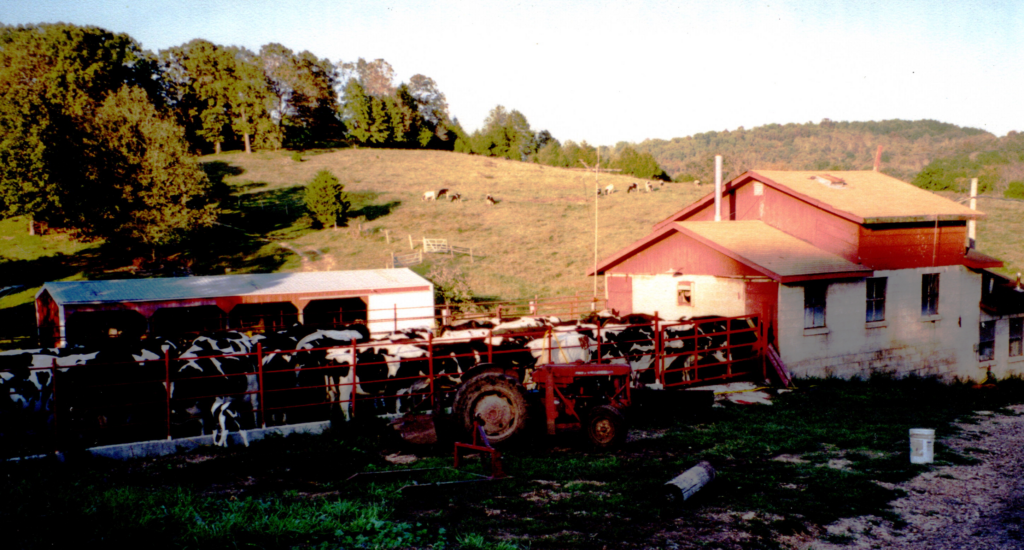
What does a cow know about psychology? Apparently, a lot. I have learned many lessons from my dealings with cows in my youth. I grew up on a small dairy farm in Southwest Missouri, in a hilly region known as the Ozarks. The farm was approximately 20 miles from the nearest town, which got its first stop light when I was a senior in high school. To this day, the county I grew up in has more cows (74,000) than people (12,300).
Life as a dairy farmer was ideal in many ways, and there are many parts I really miss. On the other hand, there are reasons why many farmers, particularly dairy farmers, move to town in search of other jobs. Cows require feeding, milking, managing illnesses, and keeping them where they are supposed to be. Several decades since moving away from home, I can say that many of my early lessons in psychology came from a cow. Here are some valuable insights I have learned from these wonderful creatures.
Set Up Your Environment for Success
One common farm task was moving cows from one field to another. While some transitions were simple, the bigger moves were an entire family affair. Some people went ahead and closed every gate that could lead to the wrong field. Others waited at known intersections to keep the cows on the right path. A few people drove the cows from behind. Best case scenario, we also had someone on a horse leading from the front. In a multigenerational farming family, we learned these processes through trial and error.
Once, we had an unplanned adventure when the cows got out. After trying to get them back into the field too quickly (I won’t admit who did that), the cows got spooked and ran down the road. About a mile down the dirt road, they decided to turn to the left, toward the side that was nothing but woods. Of course, this spot also went straight uphill. It took several hours to get the cows back in their pasture. Next, we had to fix the fence. That made us tired, dirty, and covered in scratches from the barbed wire and running through the woods. But don’t forget, we still had to spend four hours milking the ornery creatures!
Like cows need mended fences and well-planned processes, setting up any environment for success can solve many problems. We lock our doors to prevent people from barging into someone else’s therapy session. A lollipop works surprisingly well at getting someone to start talking, even my more anxious patients. If you want to reduce fighting at recess, place the teachers close to where the kids play (watch the playground during most school recesses, and you will see what I mean). Outlet safety covers prevent your toddler from getting shocked.
Just Because You Opened the Gate Doesn’t Mean the Cow Will Go Through It
This lesson also arises from driving cattle. Cows have a talent for finding holes in fences while not seeing the opened gate they’re intended to use. We solved this problem in two different ways. The hard way was chasing one or two through the gate, while hoping the rest of the herd doesn’t run off in the meantime. This required lots of running and even more luck. The easier way was riding a horse in front of the cows to lead them through the gate. For some reason, the cows followed horses much better than they did motorized vehicles.
This experience taught me the value of teaching by example. Humans have a great capacity for social learning. If we want our children to behave in a particular way, it is much easier to show them by acting that way ourselves. Conversely, it can be next to impossible to force a kid to do something we are not willing and/or able to do ourselves. Leading by example can apply to character traits as well as skills.
My dad taught me how to treat sick calves and how to get them to drink from a bottle when they didn’t want to. Years later, I stayed the night at a friend’s house and helped his dad take care of a sick calf. Because I had the skills, I showed him what to do. While this task was so simple to me that I had forgotten I had helped, he came to me a month later very happy that the calf was still alive. Demonstrating tasks by example is a powerful learning tool for many skills such as cooking, hunting, or even shooting a free-throw.
A Water Hose Works Better Than a Stick
A constant hazard in milking cows is getting kicked. Getting kicked by a cow can hurt and is also a little startling. That leg can move more quickly than you think! When a cow kicked my dad, he would react with anger. Sometimes, his anger got the best of him, and he would hit the cow back. This often resulted in a rather noisy exchange between man and beast, with an unpleasant aftermath: spilt milk, broken equipment, scared kids, and jumpy cows (the milking barn held 8 cows at once). Over time, my dad learned that hitting a cow back reliably led to the same result.
My dad realized he would need to try something different if he wanted a different outcome. This is where the water hose came in. He discovered that spraying the cow with a water hose after getting kicked eliminates the noisy exchange and simply results in an annoyed or resigned-looking cow. Even better, the cow stopped kicking altogether after several sessions with the water hose. I hypothesize that while the cow responded to fear/threats by kicking more, the cool water disrupted its system because the cow did not expect it. While the cow did not like the water, its nervous system did not consider it threatening.
I am not suggesting that you use a water hose on someone who makes you mad! That said, acting aggressively rarely works. Aggression usually causes aggression in return. This principle works amongst adults and children. Rather than giving consequences to children, particularly harsh ones, when you feel angry and impulsive, think through the consequences first in a calm state. Many situations require creative problem solving rather than “just trying harder.”
Walk Carefully to Avoid Getting Trampled in Tight Spots
Each day we milked between 50 to 75 head of cattle. Sometimes we couldn’t use a cow’s milk. For example, we couldn’t use milk from cows on antibiotics. We called these cows “bucket cows” because we hooked up the milking machine to a special bucket to keep their milk separate. We only had one bucket, so we had to stagger the milking times whenever we had more than one bucket cow. In these situations, my dad sent me out to the corral to fetch the bucket cows at the right time.
To give perspective on this task, you need to understand two simple facts: a dairy cow is bigger than you are, and a herd of cows in a confined space can easily trample you. With that in mind, I would enter the corral, pick the next bucket cow, and push it to the front of the line. Once, a friend visited our farm. He was amazed to see me accomplish this feat. Yet, by the time I was a teenager, making all the small decisions to complete the task had become instinctive. Unless you have worked with cattle for a significant amount of time, please do not try this at home!
This experience taught me that people can learn how to accomplish difficult, complicated tasks. In therapy, you can learn how to predict and help your autistic child through fits or how to help a teenager manage panic attacks. You can learn how to use selective attention and strategic ignoring to achieve greater compliance with fewer direct commands. You can learn how to respond to thoughts of self-harm in a loved one. These and other situations require a level of skill to navigate successfully. However, with research and practice, psychologists are getting better and better at helping individuals navigate such challenges.
Lessons Learned from a Cow: Conclusion
I hope you are enjoying these stories from my youth and learning from the lessons they teach. Stay tuned for part 2 with more cow stories!
If you would like to schedule an appointment with Dr. Lamb, please contact our office.
If you found this post helpful, please share it with a friend! Thank you!
Post written by Dr. Gordon D. Lamb, Licensed Psychologist and Clinical Director
Please note posts are educational in nature and are not intended to replace psychological services when needed.


